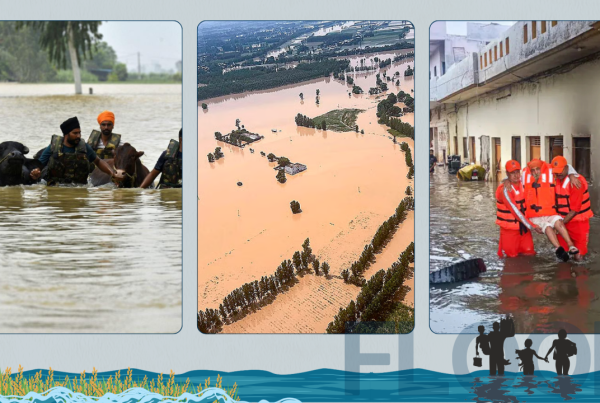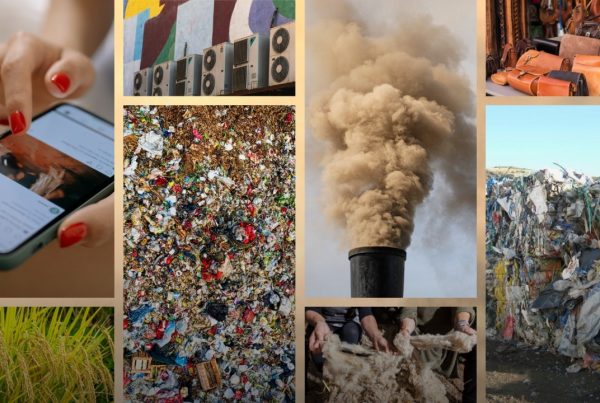


The world has already crossed the 1.5°C threshold, a point we vowed never to breach. However, instead of declining, emissions are still projected to rise well beyond 2050. Fossil fuel production and subsidies continue to expand, deforestation has resurged in several critical biomes, and rollout of renewable energy still remains uneven. At the same time, shifting political landscapes across the United States and Europe further challenged global climate diplomacy, testing the resolve of the Global North at a moment when ambition, trust and resources are most urgently needed.
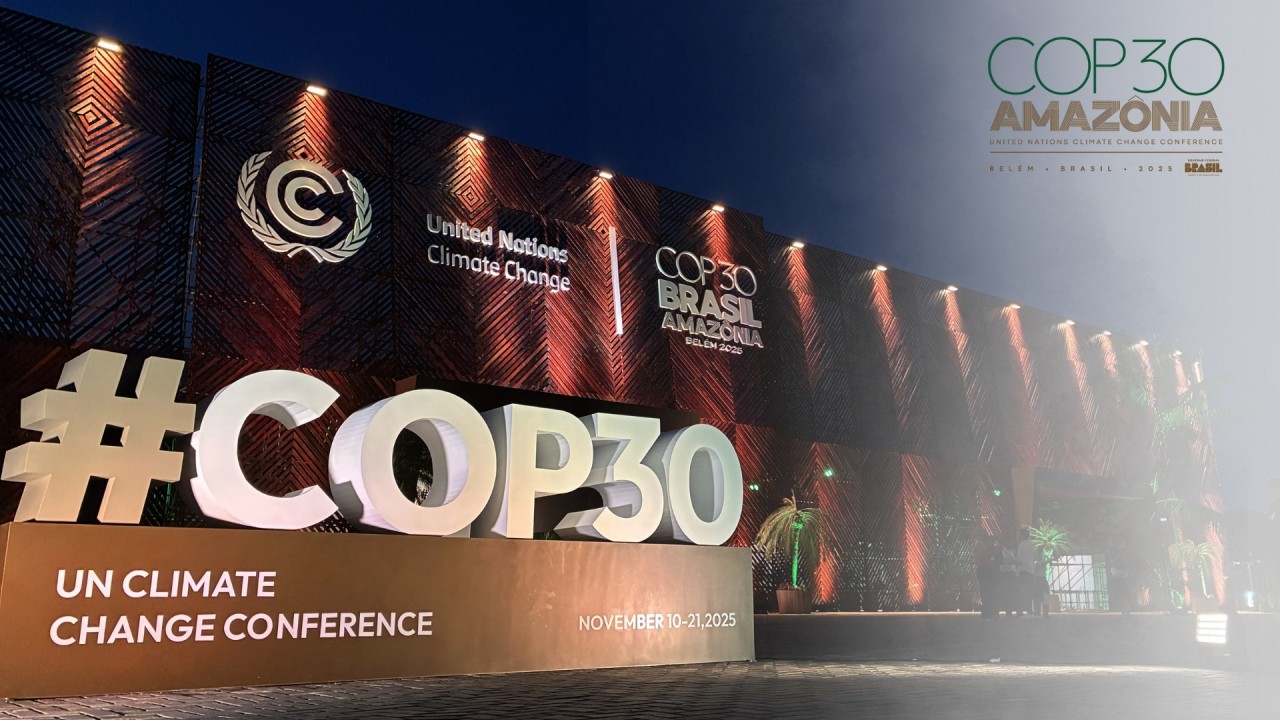
Into this backdrop arrived COP30, declared as the “COP of Truth” by Brazilian President Luiz Inácio Lula da Silva. Expectations were understandably high. Returning to Brazil was symbolic; a homecoming to the spirit of Rio 92, where the foundation of modern climate governance was laid – United Nations Convention on Biological Diversity (UNCBD), United Nations Convention to Combat Desertification (UNCCD) and the United Nations Framework Convention on Climate Change (UNFCCC) that underpins today’s COP process. COP30 also marked a decade since the Paris Agreement, offering a moment for the world to ask itself what progress had been made and what promises are yet to be fulfilled. Held at the gateway to the Amazon, many hoped COP30 would chart a more inclusive path, one that meaningfully brings in Indigenous voices into global climate decision-making. However, for many participants and observers, the real ‘truth’ was highlighted in the fact that implementation is slower than expected and governments continue to stall in their responsibilities in bringing in a sustainable future.
Thus the central question lingers on: was this year’s COP a success, or a failure?
With around 56,000 registered participants, COP30 was the second-largest climate gathering in history, surpassed only by last year’s Dubai summit. Brazil brought the largest delegation, followed by China. India’s 87-member delegation was led by Union Minister for Environment, Forest and Climate Change, Shri Bhupender Yadav. The United States government did not send an official delegation for the first time in three decades (this excludes private participation), sending a very strong signal.
The gathering also saw representation from roughly 2,500 Indigenous representatives and an estimated 1,600 lobbyists linked to the fossil fuel industry.
After a dynamic few days towards the close of the meet, which included protests from indigenous groups, delayed and revised negotiations, and even a fire breakout at the convention centre, the Brazilian COP presidency released its final package termed as “Global Mutiaro”, or collective efforts. Some of its key outcomes include:
Climate Finance
Following developed countries’ COP29 pledge to mobilise USD 300 billion annually by 2035, COP30 went further, calling for a tripling of this amount to support the most climate-vulnerable nations. Brazil’s voluntary roadmap outlined how the USD 1.3 trillion goal might be achieved, yet doubts persist over how such finance will be raised and how much will come from public versus private sources, an anxiety shaped by the persistent gap between past promises and delivery.
As a highly climate-exposed nation, India faces steep adaptation needs across agriculture, water systems, health, coastal infrastructure, and urban resilience. Current adaptation finance flows fall well short of requirements, leaving a substantial funding gap. If realised, enhanced global adaptation finance could help India strengthen early-warning systems, protect climate-
sensitive livelihoods, and scale ecosystem-based resilience, provided the funds are accessible, adaptable, and concessional. A core challenge, however, is the measurability and tracking of adaptation finance. Unlike mitigation, adaptation lacks standardised metrics, leading to inconsistencies in reporting and uncertainty over what truly counts as adaptation support.
Fossil Fuels
Expectations were high that COP30 would push forward the momentum created at COP28, where countries acknowledged for the first time the need to transition away from fossil fuels. In the end, however, the COP30 deal did not strengthen language around the transition away from fossil fuels. The final text also avoided mentioning coal, oil or gas, despite calls from countries and organisations urging the presidency to lay out a roadmap for phasing out fossil fuels. Brazil announced its own voluntary plan to launch a fossil fuel roadmap that countries could sign up to. However, this sits outside the main deal.
Just Transition
A key outcome was the decision to create a “just transition mechanism,” aimed at securing an equitable green transition that respects the rights of workers, women, Indigenous peoples, and other frontline communities. Parties asked the 64th UNFCCC Subsidiary Bodies meeting in June 2026 to prepare a draft decision so the mechanism can be put into effect at COP31 next year.
Deforestation
Despite being held in the Amazon, the negotiations delivered very little on deforestation, with the agreement failing to include substantial measures. COP30 President Corrêa do Lago instead announced a separate voluntary roadmap for forest preservation, similar to the one laid out for fossil fuels. Earlier during the leaders’ summit preceding COP30, Brazil unveiled the “Tropical Forests Forever Facility,” a fund seeking to mobilise $125 billion (£96bn) through loans and investments. However, several countries, including the UK, announced they would not provide public financing at this stage, though they indicated potential future support and signalled they would urge private investors to contribute.
Article 6
COP30 did not advance new rules for the UN’s carbon market mechanism (Article 6.4). Nearly 20 countries committed to boosting demand for high-quality credits. While progress was incremental, it may help restore trust in carbon markets. While no changes were made to the rigorous rules for Article 6.4 (the centralised UN trading mechanism), the intense debate signalled that this mechanism is expected to set a new, stringent global standard. The hope remains that strengthening integrity will restore confidence and spur greater corporate investment in mitigation.
Progress on Global Goal on Adaptation
COP30 delivered a notable outcome with the adoption of the Belém Adaptation Indicators, i.e., 59 metrics that will underpin the UAE Framework on Global Climate Resilience and help track collective progress toward the Global Goal on Adaptation. Within ecosystem and biodiversity targets, six indicators were adopted to measure how well communities relying on natural systems continue to receive ecosystem services, the extent of landscapes where adaptation measures are underway, levels of ecosystem resilience, and shifts in the threat status of vulnerable species and habitats. Delegates viewed these indicators as a step toward more clarity, accountability, and comparability to global adaptation efforts.
India and COP30
In his address at COP30, Shri Bhupender Yadav reaffirmed India’s commitment to climate action rooted in scientific evidence and global equity. He stressed the nation’s dedication to a global system characterised by rules, fairness, and respect for national sovereignty, particularly relevant in debates over unilateral trade measures. India expressed its strong support for Brazil’s inclusive leadership of the COP30 Presidency and welcomed numerous decisions finalised at the summit. However, while expressing general satisfaction with many of the outcomes, refrained from labelling COP30 a full a success given the unresolved gaps.
A notable point of contention has been India’s stance on fossil fuels. India remained among the most vocal opponents of a global ‘phase-out’ commitment going back to COP26, a position that carried political downsides. By resisting stronger language, India risked being seen as holding back global ambition at a moment when rapid decarbonisation is scientifically urgent. This stance may also complicate India’s ability to pressure developed countries on their own mitigation and finance commitments, as attention often shifts to emerging economies’ hesitations. Domestically, continued reliance on coal exposes India to long-term risks, rising climate impacts, air pollution burdens, and the possibility of stranded assets as global markets accelerate toward clean energy.
Yet India’s position is not without rationale. Supporting a ‘phase down’ rather than a ‘phase out’ reflects our development priorities, energy realities, and equity considerations. With a rapidly growing economy, rising energy demand, and low historical responsibility for emissions, India argues that an immediate fossil fuel phase-out would constrain poverty alleviation, industrialisation, and energy access.
India emphasises that developed countries, who have historically contributed the most to cumulative emissions, must take the lead in phasing out fossils and providing the finance and technology support needed for others to follow a smoother transition pathway.
What Comes Next?
COP30 delivered a mixed bag of outcomes. Some countries left reasonably satisfied while many others, particularly those more climate-vulnerable did not. Ultimately, the conference reinforced a hard reality: multilateral climate diplomacy is still inching forward when science and the real world demands a sprint.
There was meaningful progress on adaptation metrics, just transitions, and building integrity in carbon markets but challenges of fossil fuels, finance, and forests remain unresolved. As the world prepares for COP31 in Türkiye, the burden now shifts back to national governments, businesses, and civil society, to turn voluntary roadmaps into binding action, and political rhetoric into measurable emissions cuts.
Whether COP30 becomes a missed opportunity or a turning point will depend not on what was agreed in Belém, but on what happens in the months ahead. The truth remains unchanged: the window to secure a liveable future is still open, but narrowing very fast.