

In the early morning light, as mist gently lifts from Hasila Beel in Assam, fisherman Mohan navigates his boat into the water. He lowers a conical bamboo trap called a juluki, into the wetland, just as his father and grandfather used to do. Around him, egrets wade through shallow water, water lilies bloom, and the wetlands hums quietly with life.
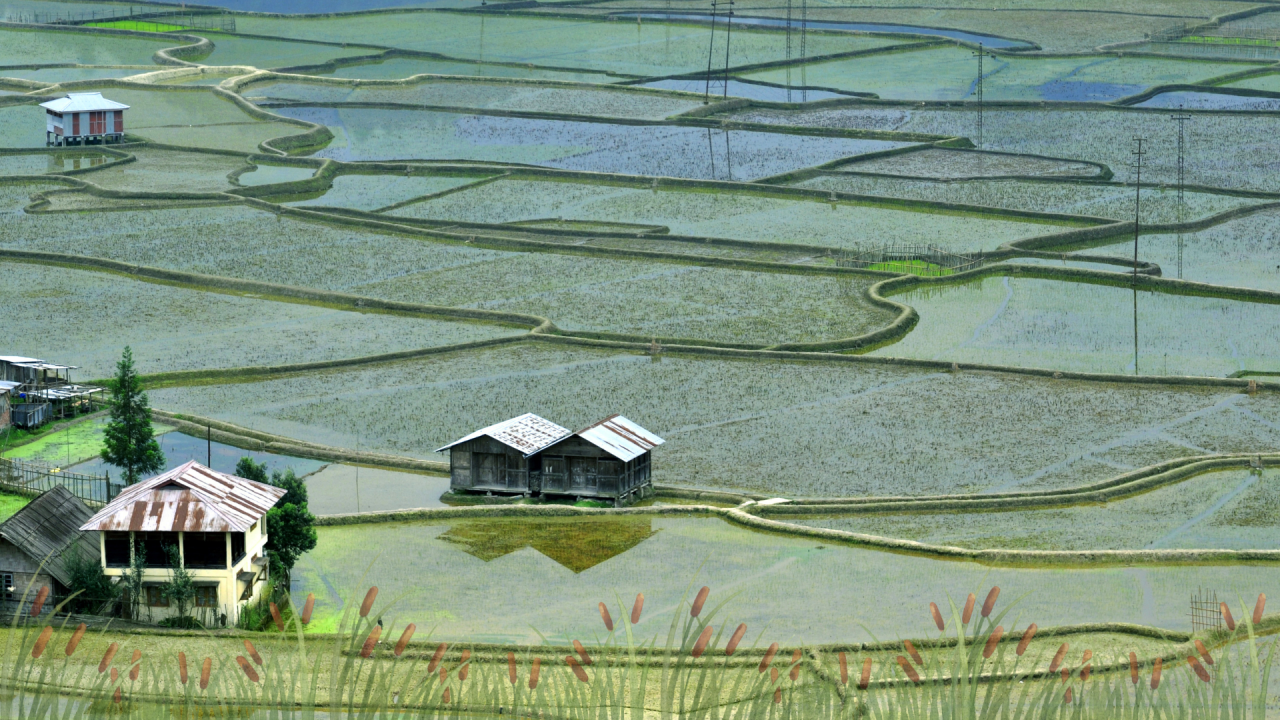
Five hundred kilometres away, in Arunachal Pradesh’s Ziro Valley, Apatani women work knee-deep in terraced paddy fields. Fish dart between rice plants, feeding on insects and weeds. This integrated rice-fish system, known locally as Aji, has sustained the valley for over 500 years, without chemical fertilizers or machinery.
These practices are not relics of past. They are living systems, sustained by indigenous and local communities across India. They remind us that the future of wetland conversation may not lie in reinventing solutions, but in recognising those that have already worked for centuries.
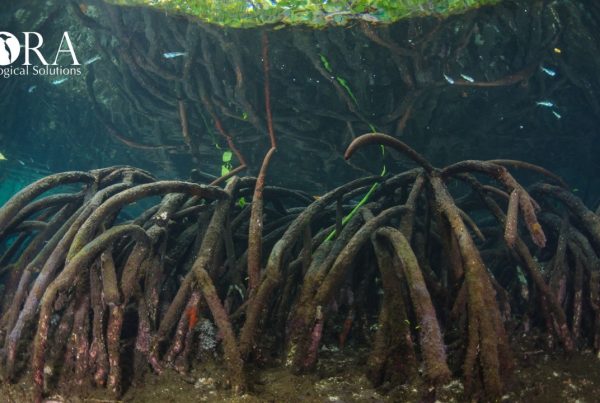
India is home to over 750,000 wetlands (National Wetlands Atlas 2021, MoEFCC) spread across ten bio-geographic zones, from the Sundarbans’ mangroves to Himalayan high altitude lakes, from seasonal desert pools to Kerala’s backwaters. These ecosystems support the livelihood of over 500 million people. They filter water, buffer floods, recharge groundwater, and sequester carbon. India’s mangrove wetlands are among the most efficient carbon sinks, stoing between 212 and 725 tonnes carbon per hectare, equivalent to the carbon in over 1.1 million litres of petrol per hectare (Ramsar Convention, 2021).
What often escapes our attention is that smaller wetlands managed by local communities using traditional practices show greater resilience. Across India, these working wetlands, known as beels, bheries, taals, chaurs, and kayals, have developed community-based management systems that maintain ecological balance while supporting livelihoods.
They represent traditional ecological knowledge (TEK) systems that have sustained both ecosystems and communities for centuries. It is built through accumulated observations and practices developed over generations through direct interaction with ecosystems.

In coastal Tamil Nadu, fishing communities understand seagrass bed dynamics, species distributions, relationships between seagrass health, and fish populations. This knowledge often complements scientific documentation (Newmaster et al., 2011). In the floodplain wetlands of Eastern India, farmers practice rice cultivation by integrating aquaculture. They use fish to control pests naturally while the rice paddies provides breeding habitat. Soil fertility improves, water is conserved, and yields remain stable, without chemical inputs. (Barman et al., 2025).
The Aptani system in Ziro Valley, Arunachal Pradesh, is perhaps the most celebrated example. Recognised by FAO as a Globally Important Agricultural Heritage System (GIAHS), it combines terraced paddy fields, it combines bamboo-based irrigation, fish cultivation, and nitrogen-fixing plants into finely balanced whole. Productivity remains high, biodiversity thrives, and external inputs are minimal. The practice is strongly sustained by women, who constitute nearly 80% of those maintaining the tradition, with women accounting for about 46% of fish farmers in some villages (UNDP, 2021 a).
Elsewhere, indigenous fishing communities in Assam and Bihar use highly selective gear like bamboo traps, cast nets, and season and species specific tools designed to selectively avoid juvenile fish and reduce bycatch.
Fishing pauses during breeding periods, and rules are enforced not by distant authorities, but by social norms and collective agreement. Wetlands are viewed as common natural resources requiring collective stewardship.
Documentation from Gokul wetland in Bihar and community fishing festivals in Assam shows that traditional knowledge includes understanding of fish migration patterns, breeding seasons, feeding behaviours, and habitat requirements. This knowledge enables adaptive management that responds to changing conditions (Barman et al., 2025).
In Assam, homes are built using bamboo, thatch, and reeds harvested selectively from wetlands. These materials are flexible, water resistant, and compatibility with wetland environments. When discarded, they return to the ecosystem as organic matter, maintaining the natural nutrient cycle.
In the Western Ghats, traditional cattle-rearing systems integrate livestock management with wetland conservation. Communities practice rotational grazing that prevents overuse, utilize wetland vegetation as a fodder while maintaining diversity, and incorporate cattle waste as natural fertiliser.
In Odisha, communities have developed storm water management systems like tanks, channels, levees, and retention areas, that store water, reduce floods, and recharge groundwater by working with natural hydrological patterns.
These practices challenge a persistent myth: that conservation and livelihoods are in conflict. In reality, they show that livelihoods rooted in ecological understanding often strengthen conservation outcomes.
India has begun to recognise this. In recent years, thousands of small wetlands have been rejuvenated through programmes that emphasise community participation and local stewardship. National policies and international frameworks increasingly acknowledge the role of indigenous and local communities in wetland management.
The Ramsar Convention’s Resolution XIII.15 addresses cultural values and practices of indigenous peoples and local communities in relation to climate change mitigation and adaptation in wetlands, and Resolution XIII.19 on Sustainable Agriculture in Wetlands encourages support for traditional and innovative wetland uses while maintaining ecological character.
India’s Wetlands (Conservation and Management) Rules, 2017, provide legal frameworks for wetland protection, and the Amrit Dharohar Capacity Building Scheme trains stakeholders in sustainable wetland practices and emphasizes traditional knowledge in management.
Effective integration of policy and practice requires recognizing indigenous and local communities as the knowledge holders and equal partners in conservation. Incorporating traditional management practices into formal plans, supporting community-based institutions, and providing legal frameworks to protect community rights for wetland resources.
But recognition alone is not enough.
Too often, traditional knowledge is treated as anecdotal or symbolic. Conservation plans are still frequently designed without meaningful community participation. Customary rights over land and water remain insecure. External pressures like pollution, upstream dams, land acquisition, and climate shocks, continue to overwhelm even the most resilient traditional systems.
If wetland conservation is to succeed, this must change.
First, traditional ecological knowledge associated with wetlands must be systematically documented with communities leading the process, not as extractive research, but as living knowledge protected by consent, ownership, and benefit-sharing.
Second, meaningful conservation is impossible without secure community rights. Legal and policy frameworks must recognise customary land and water rights, protect access to traditional wetland territories, and institutionalise community roles in wetland governance.
Third, traditional governance systems deserve explicit support. Many indigenous and local communities maintain sophisticated institutions governing resource use, conflict resolution, and adaptive management, which must be strengthened, rather than replaced by rigid, top down models.
Fourth, science and traditional knowledge must be treated as partners, not as competing systems. Scientific tools can enhance traditional practices, while traditional knowledge provides ecological context, temporal depth, and social nuance that science alone cannot supply.
Fifth, investment priorities need recalibration. Funding may flow directly to community-led conservation initiatives, where local stewardship aligns biodiversity outcomes with livelihoods.
Finally, cultural connections to wetlands must be revitalised. Rituals, festivals, and oral histories are not peripheral, they are how ecological values are transmitted across generations. Without them, conservation becomes fragile.
As World Wetlands Day 2026 reminds us of the link between wetlands and prosperity, the message is clear. Wetlands will not be saved by fences, maps, or reports alone. They will be saved by the people who know when to fish and when to wait, where to build and where not to, how to take enough, and no more.
India’s wetlands have guardians. They have always had them. The real question is whether conservation policy is ready to stand beside them, listen, and learn.
Protecting wetlands, ultimately, means protecting the knowledge, practices, and communities that have sustained them for generations.
References and Additional Reading
- G. Oviedo and M. Kenza Ali. (2018), Indigenous peoples, local communities and wetland conservation, Ramsar Convention Secretariat.
- Convention on Wetlands. (2021). The contributions of blue carbon ecosystems to climate change mitigation. Briefing Note No. 12. Gland, Switzerland: Secretariat of the Convention on Wetlands.
- UNDP (2021 a). A bio-cultural treasure: Revitalizing traditional knowledge and promoting ecosystem-based solutions in North-East India. https://undp-nature.exposure.co/a-biocultural-treasure
- UNDP India (2021 b). Restoring and Conserving Wetlands: A Lesson in Community Farming. India High Range Mountain Landscape Project. https://www.undp.org/india/blog/restoring-and-conserving-wetlands-lesson-community-farming.
- Barman, A., Rajak, F. and Jha, R., 2025. Integrating traditional knowledge systems for wetland conservation and management: A critical analysis. Nature Environment and Pollution Technology, 24(1), B4212. https://doi.org/10.46488/NEPT.2025.v24i01.B4212
- Newmaster, A.F., Berg, K.J., Ragupathy, S., Palanisamy, M., Sambandan, K., & Newmaster, S.G. (2011). Local knowledge and conservation of seagrasses in the Tamil Nadu State of India. Journal of Ethnobiology and Ethnomedicine, 7, 1-17.
- Ramsar Convention (2018). Resolution XIII.15: Cultural values and practices of indigenous peoples and local communities and their contribution to climate change mitigation and adaptation in wetlands.
- Ramsar Convention (2018). Resolution XIII.19: Sustainable agriculture in wetlands.
- Government of India (2017). Wetlands (Conservation and Management) Rules, 2017. Ministry of Environment, Forest and Climate Change.