

From safeguarding coastlines to capturing carbon, mangroves are proving to be far more than nature’s first line of defense; emerging as powerful allies in climate action, biodiversity conservation, and the long-term resilience of coastal communities.
Mangroves are among the world’s most productive and biologically diverse ecosystems, thriving along tropical and subtropical coastlines. As the only woody plants evolutionarily adapted to saline environments, they form a bridge between marine and terrestrial ecosystems, supporting rich biodiversity while delivering essential ecosystem services.
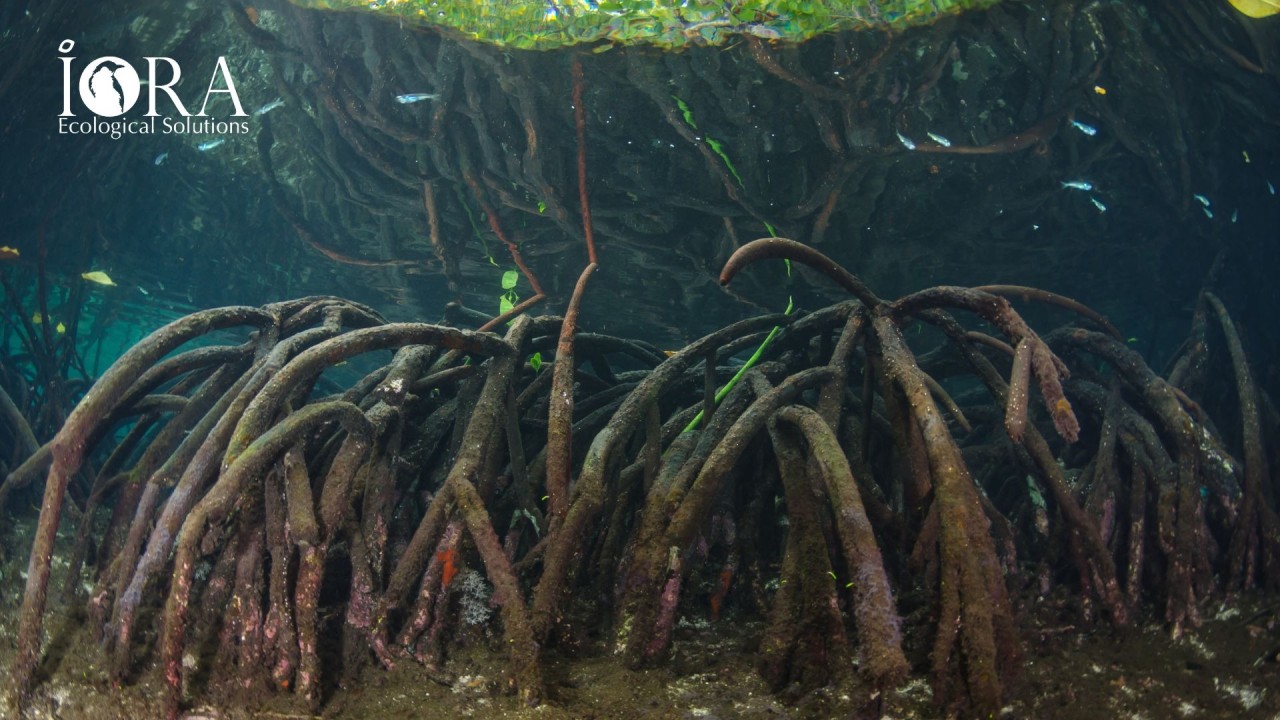
Mangroves do far more than just protect coastlines. For years, they have served as the first line of defense against coastal erosion, storm surges, and rising sea levels. Today, their competence extends far beyond shoreline protection. They are increasingly gaining global recognition as biodiversity hotspots, climate champions, and vital protectors of coastal communities. Their tangled roots provide nursery grounds for young fish, sustain fisheries and support coastal livelihoods. Together these ecosystem services strengthen both ecological and community resilience in a changing climate.
Yet, one of their most remarkable contributions has only recently gained widespread attention. When it comes to carbon sequestration, terrestrial forests often take center stage. However, mangroves are the unsung heroes of climate mitigation, capable of storing up to four times more carbon per hectare than many terrestrial forests[1], making them one of the most effective natural carbon sinks. What makes these coastal forests especially valuable is not just the amount of carbon they capture, but also how long they store it. While carbon held in vegetation remains stored for years or decades. the carbon buried deep within the rich mangrove sediments can stay locked away for centuries to millennia[2]. This long-term storage of ‘blue carbon’, makes mangroves one of nature’s most powerful climate solutions.
Despite their remarkable capacity, mangroves have long remained underrepresented in global carbon accounting and climate policy. Historically, research and conservation efforts focused on terrestrial forests and oceans, leaving a significant gap in our understanding of the role coastal blue carbon ecosystems play in regulating the climate. As these ecosystems face increasing threats from human activities and environmental change, there is an urgent need to recognize their true value.

Understanding the Coastal Blue Carbon
The term coastal ‘blue carbon’ describes the carbon sequestered within coastal ecosystems, including mangroves, seagrasses, and salt marshes[3],[4]. These ecosystems store such vast amounts of carbon that the term “blue carbon” was coined to distinguish it from the “green carbon” stored in terrestrial forests.
Carbon sequestration in Mangrove Ecosystems
The unique environment of mangroves makes these habitats carbon powerhouses. Their waterlogged, oxygen-poor soils slow the decomposition of organic matter, allowing carbon to accumulate and remain buried beneath layers of sediment for centuries. continue to pile on top, burying it even deeper. This slow, steady accumulation is the primary characteristic that sets blue carbon ecosystems apart from other coastal habitats like coral reefs and kelp forests[5]. The anaerobic bacteria present in mudflats uses hydrogen sulfide present in mangrove swamp to reduce carbon dioxide into organic matter, a process not found in terrestrial forests5,[6].
Studies show that mangroves bury carbon at an average rate of 226 g C m-2 yr-1, compared with only 4-5 g C m-2 yr-1 in many terrestrial forest ecosystems[7]. These characteristics make mangroves one of the world’s most effective blue carbon ecosystems.
However, this remarkable ability also makes them vulnerable. As long as mangroves remain healthy, they continue removing carbon dioxide from the atmosphere. But when they are cleared, degraded, or disturbed, the carbon stored in both their biomass and soils can be released back into the atmosphere, transforming a valuable carbon sink into a significant source of greenhouse gas emissions. The destruction of a mangrove forest therefore does more than eliminate a natural climate solution, it can also unleash centuries of stored carbon.
What is driving mangrove loss?
Despite their immense ecological and climate value, mangroves remain among the world’s most threatened ecosystems. They are being lost at a faster rate than many other forest types and if the trend continues, the consequences could be severe for biodiversity, coastal communities, and global climate regulation[8].
Urban expansion and infrastructure development continue to replace mangrove habitats with ports, roads, tourism facilities, and housing. Aquaculture and agriculture often convert mangrove landscapes into shrimp farms and agricultural land, permanently altering coastal ecosystems. Rising sea levels, changing rainfall patterns, stronger storms, pollution, and unsustainable harvesting further weaken these forests, reducing their ability to protect coastlines, support biodiversity, and store carbon.
Protecting and restoring mangroves is therefore not just a conservation goal but has become a climate imperative.
Strategies to Protect Blue Carbon Ecosystems
Safeguarding mangroves requires more than simply preserving their carbon stocks. Effective conservation must balance climate objectives with biodiversity protection, ecosystem health, and community well-being[9].
- Policy & Governance
A supportive framework for blue carbon conservation can be created by incorporating blue carbon into climate policies (REDD+, climate action plans), integrating carbon storage with biodiversity conservation and aligning with climate, biodiversity, and coastal management goals
- Restoration & Sustainable Livelihoods
Restoring mangrove ecosystems through nature-based solutions such as natural regeneration (volunteer recruitment), hydrological restoration, reforestation, and long-term monitoring, while supporting ecotourism and sustainable coastal livelihoods.
- Sustainable Finance & Markets
Long-term funding for mangrove conservation can be secured through sustainable financing mechanisms such as carbon credits, carbon markets, and Payments for Ecosystem Services (PES), which can create economic incentives for protecting and restoring these valuable ecosystems.
- Community Participation & Awareness
Putting people at the heart of conservation by empowering local communities and Indigenous peoples, incorporating Traditional Ecological Knowledge (TEK), promoting community-based conservation, raising public awareness, and encouraging active stakeholder participation.
- Science, Research & Innovation
Supporting evidence-based conservation through research, monitoring, and technological innovation. This includes improving the understanding of blue carbon storage, assessing ecosystem health, tracking restoration outcomes, and using advanced tools and technologies to enhance conservation planning and management.
Mangroves: From Conservation Priority to Investment Opportunity
For decades, mangrove conservation was viewed primarily as an environmental responsibility. Today, it is increasingly being recognized as a compelling investment opportunity.
As demand for high-quality nature-based climate solutions grows, mangrove ecosystems are becoming valuable assets within global carbon markets. Their exceptional capacity to capture and store carbon enables restoration projects to generate carbon credits, creating financial incentives for conservation while contributing to global climate goals.
Mangrove restoration and afforestation/reforestation can command prices of between $15 and $35 per credit plus potential premiums due to sustainable development benefits[10]. This growing market is attracting governments, businesses, and institutional investors seeking climate solutions that deliver measurable environmental, social, and economic returns.
By combining carbon finance with biodiversity conservation, coastal protection, and sustainable livelihoods, mangrove projects demonstrate that protecting nature can also create lasting economic value.

Conclusion
Mangroves remind us that some of the most effective climate solutions are already working, quietly, naturally, and at remarkable scale. They protect coastlines from storms, sustain fisheries and biodiversity, support millions of livelihoods, and lock away vast amounts of carbon for generations. Few ecosystems deliver such a powerful combination of climate mitigation, climate adaptation, and ecological resilience.
As the world seeks solutions to the interconnected challenges of climate change and biodiversity loss, mangroves provide a compelling example of how nature an lead the way. Protecting and restoring these ecosystems is therefore not just an environmental priority but a climate necessity. Through effective conservation, restoration, supportive policies, community participation, and innovative financing mechanisms such as carbon markets, we can safeguard one of nature’s most efficient carbon sinks and build a more resilient and sustainable future for both people and the planet.
[1] Alongi, D. M. (2012). Carbon sequestration in mangrove forests. Carbon management, 3(3), 313-322
[2] Duarte, C. M., Middelburg, J. J., & Caraco, N. (2005). Major role of marine vegetation on the oceanic carbon cycle. Biogeosciences, 2(1), 1-8.
[3] Mcleod, E., Chmura, G. L., Bouillon, S., Salm, R., Björk, M., Duarte, C. M., … & Silliman, B. R. (2011). A blueprint for blue carbon: toward an improved understanding of the role of vegetated coastal habitats in sequestering CO2. Frontiers in Ecology and the Environment, 9(10), 552-560.
[4] https://www.climate.gov/news-features/understanding-climate/understanding-blue-carbon
[5] Choudhary, B., Dhar, V., & Pawase, A. S. (2024). Blue carbon and the role of mangroves in carbon sequestration: Its mechanisms, estimation, human impacts and conservation strategies for economic incentives. Journal of Sea Research, 199, 102504.
[6] Zhu, J. J., & Yan, B. (2022). Blue carbon sink function and carbon neutrality potential of mangroves. Science of the total environment, 822, 153438.
[7] Mcleod, E., Chmura, G. L., Bouillon, S., Salm, R., Björk, M., Duarte, C. M., … & Silliman, B. R. (2011). A blueprint for blue carbon: toward an improved understanding of the role of vegetated coastal habitats in sequestering CO2. Frontiers in Ecology and the Environment, 9(10), 552-560.
[8] Ohimain, E. I., Turner, R. E., & Middleton, B. A. (2026). Mangrove ecosystems: Importance, threats and opportunities for restoration. Water, 18(7), 787.
[9] Choudhary, B., Dhar, V., & Pawase, A. S. (2024). Blue carbon and the role of mangroves in carbon sequestration: Its mechanisms, estimation, human impacts and conservation strategies for economic incentives. Journal of Sea Research, 199, 102504.