

A closer look at how standardised nursery practices in India, while efficient, may be undermining ecological resilience, and what needs to change.
India is planting more trees than ever before. Nurseries are scaling up, production systems are improving, and survival rates are rising. By most metrics, this appears to be a success story. Yet beneath these gains lies an uncomfortable truth: while we may be restoring green cover, we are steadily losing ecological depth.
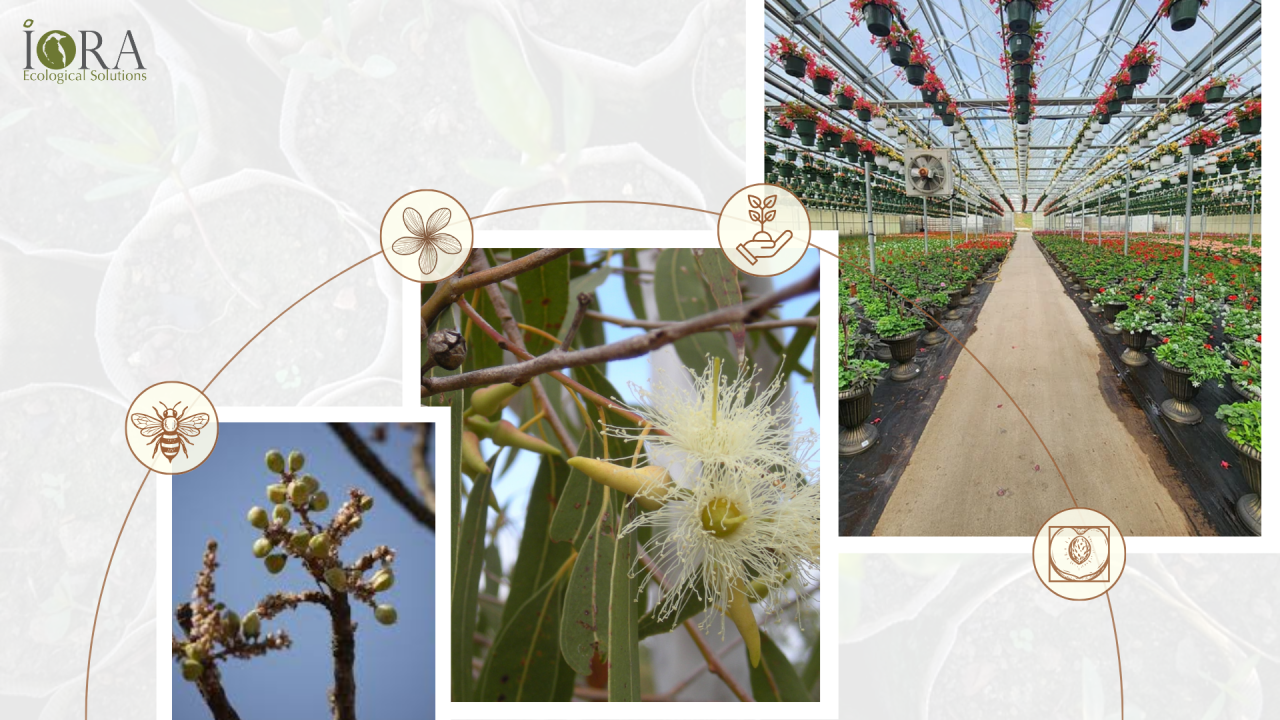
Across commercial forestry, restoration programmes, agroforestry systems, and urban greening initiatives, standardisation has enabled nurseries to meet rising demand with remarkable efficiency. It ensures predictable germination, stronger survival rates, improved plant quality, and easier management at the species and even sub-species level. In a country as ecologically diverse as India, such efficiency is often seen as necessary.
And in many ways, it is.
But beneath this progress lies a quieter and more dangerous problem. As nurseries increasingly focus on a narrow basket of economically valuable, fast-growing, and operationally convenient species, an invisible ecological cost is beginning to emerge. Species that are slower growing, less commercially fashionable, or tied to highly local ecological conditions are steadily being pushed to the margins. Species such as Bijasal (Pterocarpus marsupium), Salai (Boswellia serrata), Anjan (Hardwickia binata), Kullu (Sterculia urens), and Dudhi (Wrightia tinctoria), each critical to their native ecosystems are becoming increasingly rare in mainstream nursery systems.
What appears to be efficiency in nursery operations may, in fact, be narrowing the biological foundations on which resilient landscapes depend.
This is the silent curse of nursery simplification.
The logic behind this shift is not difficult to understand. High demand species are easier to market, monitor and scale. They come with established protocols for seed collection, storage, germination, and seedling raising. They align neatly with project cycles, procurement systems, and financial models. For private industry, this reduces uncertainty. For government and development programmes, it offers measurable outputs at scale.
However, ecological systems do not function on convenience. They function on diversity.
A forest, woodland, or agroforestry landscape is not simply a collection of trees. It is a network of relationships: between canopy and soil, fruit and pollinator, root and fungus, flower and season, species and microclimate. When nursery systems become dominated by only a few preferred species, this complexity begins to erode. Ecologically vulnerable yet biologically important species are excluded not only from supply chains and plantation lists, but eventually from ecological memory itself.
And that exclusion carries consequences.
Many native species are not optional additions; they are foundational. Some provide food for birds and insects at specific times of the year. Others stabilise soils under particular moisture regimes. Some produce fruit, fodder, leaf litter, nectar, or shade that standard replacement species cannot replicate. For instance, Salai (Boswellia serrata) and Kullu (Sterculia urens) play important roles in dryland forest ecology, while Anjan (Hardwickia binata) contributes significantly to soil stability and fodder systems in semi-arid landscapes. Their absence cannot be easily substituted by commercially preferred species.
When these species disappear from nursery practice, they do not simply lose market relevance. They lose continuity. And once continuity is lost, recovery becomes far more difficult.
The dangers of hyper-focusing on a narrow species base extend beyond ecology. They are systemic. Monocultures and near-monocultures are efficient until they are not. Their weakness lies in uniformity. When entire plantation systems becomes dependent on a small genetic and species pool, one disease outbreak, climatic anomaly, or market shock can trigger cascading losses.
The Cavendish banana offers a powerful warning. Its dominance in the global banana trade created an industry built around uniformity and scale, but that same uniformity amplified vulnerability. Panama disease, caused by Fusarium wilt, has shown how dependence on a narrow genetic base can place an entire production system at risk.
India has witnessed similar patterns. Dalbergia sissoo (Shisham), once extensively promoted across northern India due to its fast growth and timber value. Over time, dieback disease associated with pathogens such as Fusarium solani caused widespread mortality, affecting both ecological stability and farmer livelihoods. The lesson was clear: dependence on a limited species base creates systemic vulnerability.
Even teak, despite its commercial value and widespread cultivation, is not immune. Large-scale teak plantations remain vulnerable to pest outbreaks, including teak defoliators, skeletonisers, termites, and stem borers. Efficiency may improve short-term productivity, but it can build ecological fragility into the system itself.
There is another, deeper loss that simplification creates: the loss of knowledge.
Nursery science is not just about infrastructure or inputs. It is also about accumulated local wisdom. Many native species require highly species-specific understanding of fruiting cycles, seed maturity, dormancy breaking, treatment methods, sowing windows, moisture regimes, root behaviour, and transplanting sensitivity. Such knowledge is often highly local and built over time through practice. Once a species falls out of nursery circulation, the practical knowledge associated with it begins to fade as well.
A strong example is Bijasal (Pterocarpus marsupium). Traditionally propagated in forest nurseries across central and southern India, practitioners understood that its hard seed coat required specific pre-treatment methods such as soaking or scarification) for successful germination, along with precise sowing windows linked to monsoon timing. With the shift toward easier, fast-growing plantation species like Eucalyptus, Bijasal and Harra has declined in nursery cycles. As a result, the practical knowledge of seed treatment, timing, and handling has faded, making it difficult for many nurseries today to raise it effectively.
Similar knowledge gaps are now emerging for species like Dudhi (Wrightia tinctoria) and Salai (Boswellia serrata), where propagation techniques, site preferences, and management practices are becoming increasingly fragmented or lost due to reduced nursery focus.
This loss becomes especially dangerous in an era of climate instability.
Climate change is already altering flowering and fruiting phenology across many native species, disrupting the timing on which seed collection and nursery preparation depend. Mahua, for instance, has shown shifts in flowering timing, affecting both ecological synchrony and local livelihoods. If nursery systems fail to adapt alongside these climatic shifts, both regeneration and cultural knowledge risk falling behind.
The disappearance of native diversity, therefore does not always happen dramatically through deforestation and extinction. Sometimes it happens quietly, through omission. A species is no longer raised. Its seeds are no longer collected. Its propagation challenges are no longer studied. A generation later, it is considered too difficult, too uncertain, or simply irrelevant.
This is precisely why nursery simplification must be understood not only as a technical issue, but as a biosphere integrity issue. The answer, however, is not to reject nursery standardisation altogether. Quality control, phytosanitary discipline, species-level protocols, and production efficiency remain essential. The challenge is to move from simplification to intelligent diversification. India needs nursery systems that can produce quality planting stock without collapsing diversity into convenience.
That requires a different kind of partnership.
Policy makers, industry, academia, and the scientific institutions must come together to co-create locally grounded nursery systems. Universities and research institutions can help generate propagation protocols for underrepresented native species. Forest departments and local communities can contribute by sharing their knowledge on seed sources, phenology, and site suitability. Public and private nurseries can help scale that knowledge into scalable production systems.
Most importantly, policy frameworks must evolve beyond rewarding uniformity of growth and green cover increase alone and begin actively valuing diversity-centred nursery systems.
Today, many certification frameworks, procurement norms, and plantation guidelines continue to privilege standardised outputs: high-volume seedling production, quick survival rates, and a narrow set of commercially proven species. This leaves little incentive for nurseries to invest in underrepresented native species, local seed systems, or climate-responsive propagation knowledge.
A more forward-looking policy architecture would reward diversity-centred nursery systems, those that conserve regional diversity, develop propagation protocols for ecologically important species, and supply planting material tailored to local landscapes rather than a one-size-fits-all model. Biodiversity-linked incentives, revised accreditation norms, public procurement preferences, and targeted research support could all help make this transition viable. Carbon registries are already addressing this challenge to some extent by increasingly recognising biodiversity within project assessment frameworks and by elevating it as a major value-add through labels such as the Climate, Community and Biodiversity standards. Reintegrating such underrepresented native species such as Bijasal (Pterocarpus marsupium), Salai (Boswellia serrata), Anjan (Hardwickia binata), Kullu (Sterculia urens), and Dudhi (Wrightia tinctoria), into nursery and plantation systems will be essential to restoring ecological functionality and strengthening long-term resilience across landscapes.
Strengthening the Role of the Forest Department
The Forest Department can play a pivotal role in this transition. With its nursery networks, plantation infrastructure, and technical expertise, it is uniquely positioned to integrate biodiversity targets into restoration programmes. Native but less commercially popular species should not only be planted, but systematically monitored through community-based stewardship models.
However, for meaningful and sustained impact, this transition must extend beyond the Forest Department and be adopted at a national scale. A coordinated approach involving multiple government departments, supported by strong policy backing, revised programme guidelines, and aligned incentives, will be essential to embed biodiversity-centred nursery and plantation systems into mainstream practice across landscapes.
Because the best species for one landscape may not be the best species for another.
A transition towards biodiversity-integrated nursery and plantation systems is not merely desirable, it is necessary. Landscapes that incorporate a wider range of native species are better positioned to maintain trophic interactions, enhance soil stability, support pollinator networks, preserve genetic diversity and withstand climate uncertainty. From a risk management perspective, diversification also reduces systemic vulnerability across restoration programmes, carbon initiatives, and tree-based value chains by distributing ecological and economic dependence across multiple species rather than concentrating it within a narrow subset.
The erosion of native tree diversity through nursery simplification represents a gradual but significant weakening of ecological resilience. Addressing this requires a paradigm shift in how success is defined, moving beyond survival rates and scale to include diversity, ecological functionality, and long-term system stability.
Reframing nursery systems as critical nodes of biodiversity conservation, rather than merely production units, will be essential. The future of restoration will depend not on producing more uniform landscapes, but on enabling biologically diverse, locally adapted, and knowledge-rich systems capable of surviving a rapidly evolving world.