

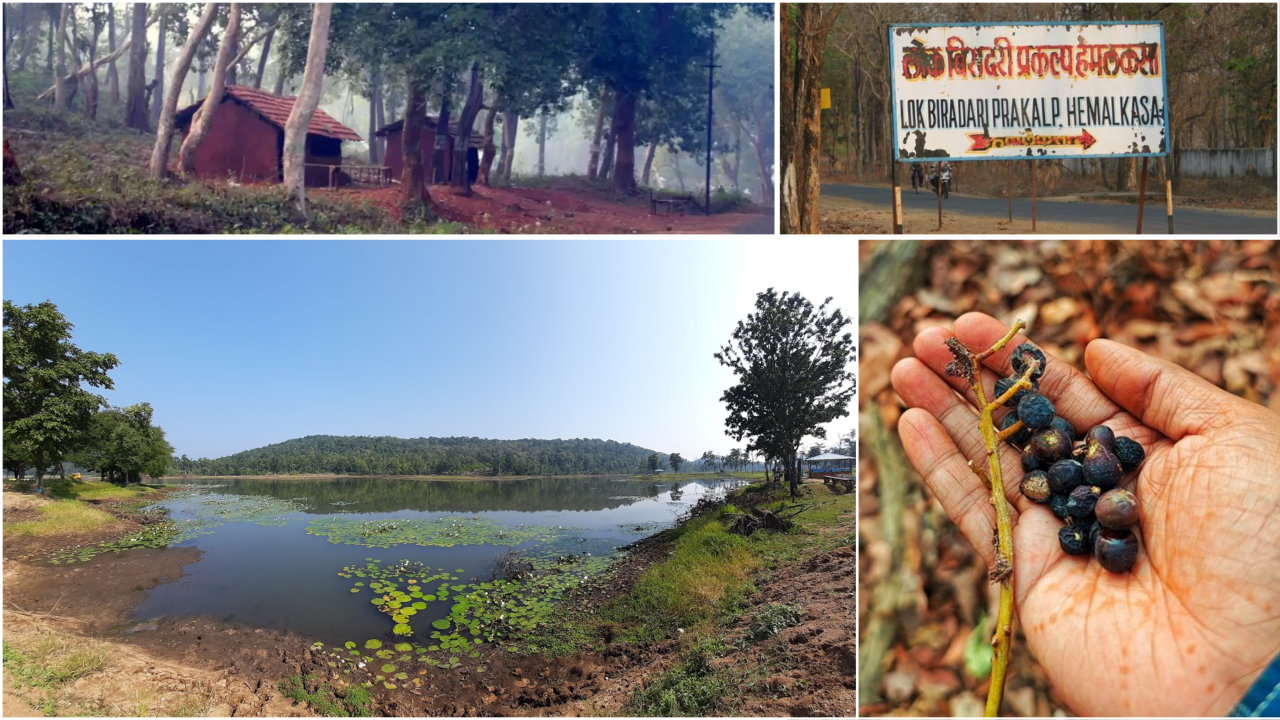
We often speak of conservation in terms of targets: hectares restored, carbon sequestered, species protected. But its truest meaning reveals itself in places where forests are not resources, but revered; and where survival depends on coexistence, not control.
My understanding of this deeper truth began long before I entered the field. As a child, I was drawn less to cartoons and more to the beauty of forests across television screens on National Geographic Channel and Discovery Channel. Those early images of wildlife and indigenous communities planted a quiet conviction in me: that the story of nature is inseparable from the story of people.
That fascination pushed me to pursue a career in forestry management at the Indian Institute of Forest Management, Bhopal.
Today, working with Iora Ecological Solutions, I engage with environmental challenges through nature-based solutions designed to strengthen both ecosystems and forest-dependent communities. Yet, it was a visit to the remote district of Gadchiroli district that reminded me why I chose this path in the first place.
My fieldwork on a carbon credit survey took me deep into Gadchiroli district and Chandrapur district. I expected long days of data collection and conversations with farmers. What I discovered instead was a landscape where life, livelihood and wildlife are woven tightly together.
Hemalkasa lies surrounded by dense forests, near the meeting point of the Indravati River and the Godavari River, with the Parlkota River completing a quiet triveni sangam at the village’s edge. The geography is breathtaking, but so is the remoteness. Roads twist through thick jungle; some stretches are navigable only on foot. During the monsoon, swollen rivers and dense greenery make access even more challenging.
And yet, it is precisely this remoteness that has preserved both biodiversity and a way of life deeply rooted in coexistence.
My visit to Lok Biradari Prakalpa transformed my understanding of conservation. Founded by the visionary Baba Amte, and carried forward by Dr Prakash Amte and Mandakini Amte, the initiative stands as a rare model where social justice and ecological stewardship reinforce one another.

I had the privilege of meeting Mrs Renuka Amte-Manohar, affectionately known as Aatya, and Dr Aniket Amte, who continue this remarkable legacy. At the Ashram School, I witnessed education in its most transformative form. Teachers were not merely instructors; they were mentors and guardians of confidence and dignity. Many students come from vulnerable backgrounds, including families affected by conflict. The school quietly bridges worlds, connecting children to opportunity while grounding them in respect for their roots.
Perhaps the most moving experience was visiting the Animal Ark. What began as a response to orphaned wild animals has evolved into a sanctuary for leopards, bears, monkeys and birds rescued from surrounding forests.
But this is no spectacle. It is a place where veterinary science and empathy intersect. Animals receive medical care, nourishment and affection. When possible, they are rehabilitated and released back into the wild. More importantly, the Ark has reshaped local attitudes. Today, many tribal villagers bring injured wildlife themselves, recognising that protecting these animals safeguards the forest that sustains them.
In a region often portrayed through the lens of conflict and remoteness, Hemalkasa offers a different narrative, one of healing.
On my journey back, I stopped at the remarkable Glory of Allapally, a six-hectare forest patch preserved since 1953 by visionary forest officers. This small but extraordinary site harbours over 70 tree species and more than 30 medicinal plants. Among them stands a teak tree over 350 years old, a silent witness to centuries of ecological change.
For researchers, it offers a rare glimpse of forest ecosystems in their near-original state. For the local Gond tribal community, it remains a living pharmacy, its medicinal plants woven into traditional healing practices. For me, it was a reminder that conservation is not merely about protecting land, but about safeguarding knowledge, memory and relationships.
Walking among the enclosures, I felt the deep bond between the caretakers and the animals. This was not just a shelter but a place where science and compassion come together. Animals receive proper medical care and affection, and whenever ready, released back to the wild.
During my visit to the Ashram School, I also saw how environmentally aware children are. This education goes beyond textbooks and is rooted in respect for nature. The school and the Animal Ark work hand in hand to nurture a new generation that understands why protecting wildlife is essential for their community’s wellbeing.
Leaving Hemalkasa, I felt inspired by how Lok Biradari Prakalpa blends care for people, education, and wildlife conservation. As someone working in ecology, this visit reminded me that protecting the planet means protecting all forms of life. The dedication of everyone involved here from teachers, aatya to leaders like Dr Prakash Amte and Aniket showcased how real change happens when communities and nature are cared for together.
My time at Lok Biradari Prakalpa made me hopeful. It taught me that even in the most challenging places, compassion can lead to healing and growth for both humans and animals. This is a story of hope, and it is one worth sharing.
On my journey back, I stopped at the remarkable Glory of Allapally, a six-hectare forest patch preserved since 1953 by visionary forest officers. This small but extraordinary site harbours over 70 tree species and more than 30 medicinal plants. Among them stands a teak tree over 350 years old, a silent witness to centuries of ecological change.
For researchers, it offers a rare glimpse of forest ecosystems in their near-original state. For the local Gond tribal community, it remains a living pharmacy, its medicinal plants woven into traditional healing practices. For me, it was a reminder that conservation is not merely about protecting land, but about safeguarding knowledge, memory and relationships.
Too often, conservation is framed as a choice between people and wildlife. Hemalkasa dismantles that false binary. At Lok Biradari Prakalpa, care for children, protection of wildlife and community empowerment are not separate agendas; they are part of the same ethic.
My time there left me hopeful. It reminded me that even in the most remote corners, compassion can take root. And when it does, it transforms not only forests and animals, but the way we understand our responsibility to the wild.